The blogger tips.wapka.site
☰ T  I  P  S 
Total (632)
 Prev6061626364Next  

Sisan Β· 1 year ago

GrΓ©vy's zebra

GrΓ©vy's zebra (Equus grevyi), also known as the imperial zebra, is the largest living wild equid and the most threatened of the three species of zebra, the other two being the plains zebra and the mountain zebra. Named after Jules GrΓ©vy, it is found in parts of Kenya and Ethiopia. Superficially, GrΓ©vy's zebras' physical features can help to identify it from the other zebra species; their overall appearance is slightly closer to that of a mule, compared to the more "equine" (horse) appearance of the plains and mountain zebras. Compared to other zebra species, GrΓ©vy's are the tallest; they have mule-like, larger ears, and have the tightest stripes of all zebras. They have distinctively erect manes, and more slender snouts.

Sisan Β· 1 year ago

Best Picture of the Zebra

Zebras (US: /ˈziːbrΙ™z/, UK: /ˈzΙ›brΙ™z, ˈziː-/)[2] (subgenus Hippotigris) are African equines with distinctive black-and-white striped coats. There are three living  species: GrΓ©vy's zebra (Equus grevyi), the plains zebra (E. quagga), and the mountain zebra (E. zebra). Zebras share the genus Equus with horses and asses, the three groups being the only living members of the family Equidae. Zebra stripes come in different patterns, unique to each individual. Several theories have been proposed for the function of these patterns, with most evidence supporting them as a deterrent for biting flies. Zebras inhabit eastern  and southern Africa and can be found in a variety of habitats such as savannahs, grasslands, woodlands, shrublands, and mountainous areas.

Sisan Β· 1 year ago

Grey Wagtail (Bird)

Grey Wagtail
___________
Irish Name: GlasΓ³g liath
Scientific name: Motacilla cinerea
Bird Family: Wagtails

Sisan Β· 1 year ago

Pied Wagtail Motacilla alba

The Pied Wagtail is a familiar black and white bird, commonly found all-year-round throughout the British Isles. These delightful little birds can be seen gathering in large roosts at dusk, in towns and cities.

Khamak Β· 1 year ago

This season's Royal Cam family albatross birds

This season's Royal Cam family,
LGK and LGL (Top Flat) WYL and BOK (Top Flat Track) 2023/24

Khamak Β· 1 year ago

Royal Albatross | EUGY

Royal Albatross | EUGY

Khamak Β· 1 year ago

Flight wandering albatross

Wandering albatross have a white head, neck and body, a wedge-shaped tail, and a large pink beak.

Juveniles have mostly dark plumage, which gradually whitens with age.

Khamak Β· 1 year ago

The Wandering Albatross with the Baby

The Wandering Albatross was first described as Diomedea exulans by Carolus Linnaeus, in 1758, based on a specimen from the Cape of Good Hope.

Khamak Β· 1 year ago

Red male Golden Pheasant

Shy and surprisingly difficult to find in mixed and conifer woodland, where it runs quickly from detected disturbance. Red-and-gold male stunning and unmistakable. Female differs from Common Pheasant in strongly barred plumage, dull pinkish (not gray) legs and feet and from Lady Amherst’s Pheasant in lighter barring, more orangeish coloration, and the lack of a bare patch of gray skin behind the eye. Native to China but introduced very locally in Britain and Hawaii; however, captive birds might escape anywhere.

Khamak Β· 1 year ago

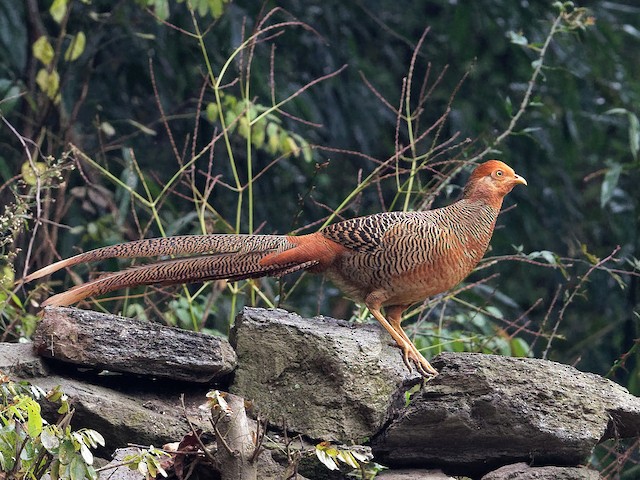
Immature male Golden Pheasant

Shy and surprisingly difficult to find in mixed and conifer woodland, where it runs quickly from detected disturbance. Red-and-gold male stunning and unmistakable. Female differs from Common Pheasant in strongly barred plumage, dull pinkish (not gray) legs and feet and from Lady Amherst’s Pheasant in lighter barring, more orangeish coloration, and the lack of a bare patch of gray skin behind the eye. Native to China but introduced very locally in Britain and Hawaii; however, captive birds might escape anywhere.
 Prev425426427428429430431...601Next  
Blogger Files Members Messages
Tips
Login
HELP CENTER :-: GO TO TOP
tips.wapka.site
Copyright Β© 2026 All Rights Reserved
Powered by wapka.org