The site tips.wapka.site
T I P S
Albums Category Messages |||
Bananas
Rongin Β· 1 year ago
Bananas
Let’s talk about bananas. So, while bananas as a fruit don’t have as much environmental impact, the movement of bananas across countries worldwide has a significant environmental impact. 

Most people eat bananas, and as a result of increased consumption, leading countries of bananas like the Philippines and Costa Rica export lots of bananas to Europe. 

Sadly, these bananas and even other fruits and vegetables travel many miles before they reach a local grocery store in Europe. This process releases carbon emissions into the atmosphere, contributing to climate change.
Rongin Β· 1 year ago
Published on 2024-12-12 12:06:15
ID NUMBER: 126668
Worst Foods For The Environment And Greener Swaps (0)

Edit Report Send Share
Rongin Β· 1 year ago
Sugar is sweet food
If you love sugar, you may not like this one. Sadly, sugar has one of the worst environmental footprints. WWF reveals that sugarcane is one of the most harmful crops for the planet2, as it replaces habitats rich in plant, insect, and animal life. 

Moreover, it requires the intensive use of land, water, and pesticides while causing soil erosion and deforestation.

Some deforested lands have lost their carbon content, and the carbon is now in the atmosphere, contributing to global warming. 

With this high climate impact, it is essential to look for a more sustainable sugar culture, including reducing our sugar consumption.
Rongin Β· 1 year ago
Cow’s milk
The dairy industry has had an adverse impact on our environment. Cow’s milk is not left out of the hazard. Data reveals that it has three times the impact of soy milk and uses much more land.

This is not to mention the production of methane - a harmful gas from cows. Cows also require feeds, which take up more resources. Overall, cow's milk isn’t the best type of milk for our environment. You can replace them with other plant-based options like oat and hazelnut milk.
Rongin Β· 1 year ago
Rice and other cereal grains
Rice and other types of cereal are a staple food for more than half of the world’s population. And while they are plant-based foods, they harm our environment. Rice fields release significant quantities of methane. According to research, we can link rice production1 up to 11% of the global methane emissions.

This makes rice production the largest producer of human methane, moving ahead of livestock production. Other cereals like corn and flour products also consume lots of resources like water and can also have an effect on plant biodiversity if not properly cultivated.
Rongin Β· 1 year ago
Chocolate
Yes, even our chocolate has a negative impact on the environment. While not many people eat large amounts of chocolate daily, dark chocolate has a significant carbon footprint on cocoa production, which consumes lots of resources like water, putting more strain on our natural ecosystem. 

Deforestation, child labor, and biodiversity loss are effects of cocoa production used in making chocolates. 

In addition, chocolate goes through several processes, including roasting, fermentation, grinding, adding milk, sugar, and vegetables, and other processes that contribute to increasing the environmental impact of chocolates. 

On the bright side, a few chocolate brands, like Beyond Good and Theo Chocolate, use Fair Trade-certified cocoa.
Rongin Β· 1 year ago
Bananas
Let’s talk about bananas. So, while bananas as a fruit don’t have as much environmental impact, the movement of bananas across countries worldwide has a significant environmental impact. 

Most people eat bananas, and as a result of increased consumption, leading countries of bananas like the Philippines and Costa Rica export lots of bananas to Europe. 

Sadly, these bananas and even other fruits and vegetables travel many miles before they reach a local grocery store in Europe. This process releases carbon emissions into the atmosphere, contributing to climate change.
Rongin Β· 1 year ago
Soybeans
Soybeans are another plant-based food that falls on our list of some of the worst foods for our environment. Farmers grow tons of soybeans, which largely go into producing soybean oil, livestock feed, and soy foods, including tofu and soy milk. 

Soybeans mainly grow in Latin America, and the high demand has led to deforestation. Also, during the production of the oil, manufacturers use chemicals that cause pollution and also release harmful gases.
Rongin Β· 1 year ago
Leafy greens
Vegetables like cabbages, Brussels sprouts, and cauliflower have less environmental footprint than animal products like eggs. Leafy greens like spinach and kale are also great for the planet and you. 

Experts consider them one of the most sustainable foods on the market. These vegetables also require less resources to produce large quantities, making them good for the planet.
Rongin Β· 1 year ago
Tomato Fruit vegetables
Apart from leafy greens, vegetable-like fruits are also great both for the environment and for you. They contain high levels of carbohydrates and water when compared to greens. They also have high fiber and vitamin C.

These types of fruits grow in warm climates, and you can eat them in various forms. Some examples of fruit vegetables include tomatoes, eggplants, peppers, squash, etc. Apart from these types of fruits, citrus fruits like oranges, lemons, and grapes have a low impact, making them great for our environment.
Rongin Β· 1 year ago
Tubers
Tubers are high in carbohydrates and are great sources of energy. You can eat them in diverse forms. You can boil, bake, or mash them. A common type of tuber is potato. Tubers grow downwards and anchor the plant into the ground. 

In the ground, they absorb nutrients used during the drier months or in winter. Other examples of tubers include Ube or purple yam, Lotus root, Yam bean root, etc.
Rongin Β· 1 year ago
Edible mushrooms
Edible mushrooms are the fleshy fruit bodies  of numerous species of macrofungi (fungi  that bear fruiting structures large enough to be seen with the naked eye). Edibility may be defined by criteria including the absence of poisonous effects on humans and desirable taste and aroma. Mushrooms that have a particularly desirable taste are described as "choice". Edible mushrooms are consumed for their nutritional and culinary value. Mushrooms, especially dried shiitake, are sources of umami flavor.

A wide variety of edible mushrooms being sold by a vendor in San Juan Sacatepequez, Guatemala
To ensure safety, wild mushrooms must be correctly identified before their edibility can be assumed. Deadly poisonous mushrooms that are frequently confused with edible mushrooms include several species of the genus Amanita, particularly A. phalloides, the death cap. Some mushrooms that are edible for most people can cause allergic reactions  in others; old or improperly stored specimens can go rancid and cause food poisoning.[1] Additionally, mushrooms can absorb chemicals within polluted locations, accumulating pollutants and heavy metals  including arsenic and ironβ€”sometimes in lethal concentrations.
Several varieties of fungi contain psychedelic  compoundsβ€”the magic mushroomsβ€”while variously resembling non-psychoactive  species. The most commonly consumed for recreational use are Amanita muscaria (the fly agaric) and Psilocybe cubensis, with the former containing alkaloids such as muscimol  and the latter predominately psilocybin.
Edible mushrooms include many fungal species that are either harvested wild or cultivated. Easily cultivated and common wild mushrooms are often available in markets; those that are more difficult to obtain (such as the prized truffle, matsutake, and morel) may be collected on a smaller scale and are sometimes available at farmers' markets or other local grocers. Despite long-term use in folk medicine, there is no scientific evidence  that consuming "medicinal mushrooms" cures or lowers the risk of human diseases.
Akkach Β· 1 week ago
Bananas from our tree
OCSDXHGFDC 
Bananas from our tree
Akkach Β· 1 year ago
Bananas on market day in Uganda
Motishon
20 Sept 2024σ°ž‹σ±™·
Bananas on market day in Uganda πŸ‡ΊπŸ‡¬
Friday 20 September 2024 
Code number: UUUUHHHHSS
Rongin Β· 1 year ago
Bananas
Let’s talk about bananas. So, while bananas as a fruit don’t have as much environmental impact, the movement of bananas across countries worldwide has a significant environmental impact. 

Most people eat bananas, and as a result of increased consumption, leading countries of bananas like the Philippines and Costa Rica export lots of bananas to Europe. 

Sadly, these bananas and even other fruits and vegetables travel many miles before they reach a local grocery store in Europe. This process releases carbon emissions into the atmosphere, contributing to climate change.
Fabias Β· 1 year ago
Gros Michel bananas
Given that each banana variety is propagated clonally, there is very little genetic diversity in the domesticated plants. This makes bananas especially vulnerable to pests and diseases, as a novel pathogen or pest could quickly decimate a variety if it were to exploit a genetic weakness among the clones. Indeed, this very phenomenon occurred in the late 1950s with the Gros Michel dessert variety, which had dominated the world’s commercial banana business. Richer and sweeter than the modern Cavendish, the Gros Michel fell victim to an invading soil fungus that causes Panama disease, a form of Fusarium wilt. Powerless to breed resistance into the sterile clones and unable to rid the soil  of the fungus, farmers were soon forced to abandon the Gros Michel in favour of the hardier Cavendish. Although the Cavendish has thus far been resistant to such a pestilent invasion, its lack of genetic diversity leaves it equally vulnerable to evolving pathogens and pests. Indeed, a strain of Panama disease known as Tropical Race (TR) 4 has been a threat to the Cavendish since the 1990s, and many scientists worry that the Cavendish too will eventually go extinct.
Fabias Β· 1 year ago
Domesticated bananas growing in a bunch
banana, fruit of the genus Musa, of the family Musaceae, one of the most important fruit crops of the world. The banana is grown in the tropics, and, though it is most widely consumed in those regions, it is valued worldwide for its flavour, nutritional value, and availability throughout the year. Cavendish, or dessert, bananas are most commonly eaten fresh, though they may be fried or mashed and chilled in pies or puddings. They may also be used to flavour muffins, cakes, or breads. Cooking varieties, or plantains, are starchy rather than sweet and are grown extensively as a staple food source in tropical regions; they are cooked when ripe or immature. A ripe fruit contains as much as 22 percent of carbohydrate  and is high in dietary fibre, potassium, manganese, and vitamins B6 and C.
Meski Β· 1 year ago
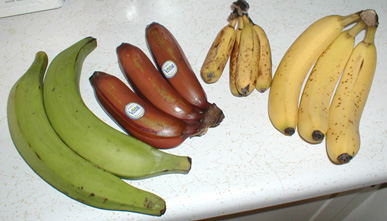
Plantains vs. Bananas: What’s the Difference?
Curious about plantains, the banana look-alikes in grocery stores? Here's a guide to the differences between plantains vs. bananas, including the most delicious ways to eat both fruits.
Meski Β· 1 year ago
The Common Vulnerability That Fintech and Bananas Share
Fintech is defined by technologies that span the cloud, mobile devices, blockchain, and AI for financial applications ranging from virtual currencies, to payment processing, money transfers, equity trading, and regulatory compliance, among others.
Banana fruits and trees dbs (4)
Banana Leaves by Lota (5)
Bananas
Albums Category Members Messages
Login
HELP CENTER :-: GO TO TOP
tips.wapka.site
Copyright Β© 2026 All Rights Reserved
Powered by wapka.org