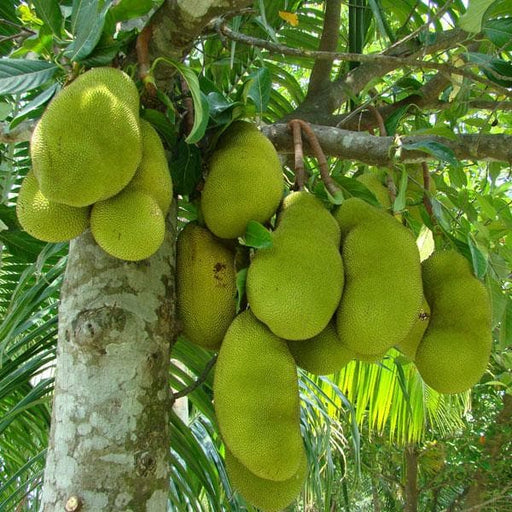
Enjoy the most delicious and nutritious tropical fruit at your home easily by growing Jackfruit plant. Jackfruit erect evergreen perennial tree in Moraceae family. Leaves are dark green, alternate, glossy and somewhatleathery, fairly large and oval in shape. Flowers are short, stout and emerges from the trunk and large branches. The Jackfruit is a multiple fruit that is composed ofthe coherence of multiple flowe
| Views 984.9K | Likes 198.3K | Dislikes | Comments 13.2K |
아이엔(I.N) "NO RETURN" | [Stray Kids(스트레이 키즈) : SKZ-PLAYER(슼즈 플레이어)] [Credits] Lyrics by : 아이엔, 방찬 (3RACHA) Composed by : 방찬 (3RACHA), 아이엔, VERSACHOI Arranged by : VERSACHOI, 방찬 (3RACHA) Original Publisher : JYP Entertainment Sub-publisher : JYP Entertainment [I.N "NO RETURN" Lyrics] You can't go back anymore No exit 나갈 수 없어 Why are you so serious? I think you should just laugh it off 아무렇지도 않다는 말도 It doesn’t matter I don’t care Look at my eyes, they’re not even shaking I know you’ll come back to me ‘I hate you’ ‘Just get lost’ ‘I don’t need you’ 몇 번을 말해도 결국 넌 back again You cannot return (Oh na na) yeah You cannot return (Oh na na) yeah You cannot return (I want it more, I want it more, I want it) You found me, now there’s no return (I want it more, I want it more, I want it) You cannot return 도망치고 헤매이다 결국 you can’t get off me You’re going crazy now 넌 이미 lost control ‘I hate you’ ‘Just get lost’ ‘I don’t need you’ 몇 번을 말해도 결국 넌 back again You cannot return (Oh na na) yeah You cannot return (Oh na na) yeah You cannot re- (I want it more, I want it more, I want it) (I want it more, I want it more, I want it) You cannot re- 돌아가도 you’re back for more (I want it more, I want it more, I want it) (I want it more, I want it more, I want it) You cannot return You cannot re (turn) You cannot return Listen to "THIS & THAT" now🚚 http://stray-kids.lnk.to/THISANDTHAT Listen to "This & That (This Remixes)" now⬅️ https://stray-kids.lnk.to/THIS_REMIXES Listen to "This & That (That Remixes)" now➡️ https://Stray-Kids.lnk.to/THAT_REMIXES Stray Kids "THIS & THAT" iTunes & Apple Music: https://stray-kids.lnk.to/THISANDTHAT/AppleMusic Spotify: https://stray-kids.lnk.to/THISANDTHAT/Spotify Stray Kids "This & That (This Remixes)" iTunes & Apple Music: https://stray-kids.lnk.to/THIS_REMIXES/AppleMusic Spotify: https://stray-kids.lnk.to/THIS_REMIXES/Spotify Stray Kids "This & That (That Remixes)" iTunes & Apple Music: https://stray-kids.lnk.to/THAT_REMIXES/AppleMusic Spotify: https://stray-kids.lnk.to/THAT_REMIXES/Spotify Stray Kids Official YouTube: https://www.youtube.com/c/StrayKids Stray Kids Official Twitter: https://twitter.com/Stray_Kids Stray Kids Official Instagram: https://www.instagram.com/realstraykids/ Stray Kids Official TikTok: https://www.tiktok.com/@jypestraykids Stray Kids Official Facebook: https://www.facebook.com/JYPEStrayKids/ Stray Kids Official Threads: https://www.threads.com/@realstraykids Stray Kids Official FANS (Android) https://play.google.com/store/apps/details?id=com.jype.fans Stray Kids Official FANS (iOS) https://apps.apple.com/app/fans-for-fans-artists/id6474999628 #StrayKids #스트레이키즈 #아이엔 #I_N #SKZ_PLAYER #슼즈플레이어 #YouMakeStrayKidsStay Copyrights 2026 ⓒ JYP Entertainment. All Rights Reserved.
Junaki · 9 months ago
Wildlife crossing ranged
Of course, crossings don’t just magically appear out of the mist like a clueless cervid. Infrastructure costs money. A study published in 2021 by Washington State University researcher Wisnu Sugiarto found that the average cost of a wildlife crossing ranged from $500,000 to $6.2 million, depending on the length, materials, and geographic complexity of the project. Some would call that a bargain. “There’s virtually no other transportation infrastructure that’s going to get you this kind of return on investment,” says Renee Callahan, executive director of ARC Solutions, a nonprofit organization that promotes the development of wildlife crossings. Sure, ARC is an advocacy group, but the research backs up its claims. These crossings netted annual savings of $235,000 to $443,000 per structure in terms of collisions prevented, according to Sugiarto’s study. The near-term outlook for wildlife crossings is favorable. The infrastructure bill passed by the U.S. Congress in 2021 included $350 million in grant funding specifically for these projects. If all that money is actually spent on building new crossings, the U.S. could add somewhere between 56 and 700, which, according to Sugiarto’s math, would save at least $13 million annually — and as much as $310 million. That means the investment could pay itself off in less than two years, and you can’t put a price tag on the human and animal lives saved. It’s the rare transportation infrastructure win that anyone can applaud — whether they have hands, hooves, or paws. |
Junaki · 9 months ago
Animal Overpasses
Why do animals cross the road? Some are just migrating. Others seek food or mates. But whatever the case, they aren’t likely to pay much attention to traffic — and that can mean disaster. Every year in the U.S., an estimated 350 million animals and more than 400 people die in animal-car crashes. And even crashes that don’t claim lives still cost an average of over $4,100, according to insurers — which all adds up to billions in annual damages. That’s why animal crossings have become so popular. These specialized over- or underpasses allow wild animals — from wolves and bears to moose, deer, elk, and even butterflies — to pass safely. They’re typically covered with vegetation and terrain to make them more attractive to animals and may be fenced and off-limits to humans. According to one study, animals are 146% more likely to use one than a random stretch of road. Another long-term investigation showed that crossings reduced accidents by greater than 80% annually. Animal Overpasses Save Bambis … and Benjamins |
Junaki · 9 months ago
Overpass in Canada
The design and engineering firm Dialog led the structural engineering and landscape architecture of the overpass, which was funded by Alberta’s provincial department of transportation and is now the first wildlife overpass in Canada constructed outside of a national park. It’s in an area where reported vehicle collisions with deer, elk, coyotes, and grizzly bears happen 69 times per year on average. “The very rough rule of thumb is for every collision that is recorded or every carcass that is seen on the side of the road, you can usually double that number,” says Dialog’s Neil Robson, the overpass project manager and lead designer. |
Junaki · 9 months ago
Stunning wildlife overpass helps animals
Located between Calgary and Banff National Park, this stretch of the Canadian Rockies is sliced in two by the Trans-Canada Highway, one of the busiest roadways in the province. That’s had deadly consequences for the area’s abundant wildlife, as well as the tens of thousands of people who drive through it every day. But now, after years of mounting wildlife-vehicle collisions, the danger to animals and humans is being addressed with a stunning new wildlife overpass. The Bow Valley Gap wildlife overpass is a roughly 200-foot-wide cap over a four-lane highway, topped with soil and forest-like plantings that creates a bridge almost indistinguishable from the forest on either side. This stunning wildlife overpass helps animals cross one of Canada’s busiest highways |
Junaki · 9 months ago
How creating wildlife crossings can help reindeer
How creating wildlife crossings can help reindeer, bears – and even crabs This article is more than 5 years old Sweden’s announcement this week that it is to build a series of animal bridges is the latest in global efforts to help wildlife navigate busy roads Every April, Sweden’s main highway comes to a periodic standstill. Hundreds of reindeer overseen by indigenous Sami herders shuffle across the asphalt on the E4 as they begin their journey west to the mountains after a winter gorging on the lichen near the city of Umeå. As Sweden’s main arterial road has become busier, the crossings have become increasingly fractious, especially if authorities do not arrive in time to close the road. Sometimes drivers try to overtake the reindeer as they cross – spooking the animals and causing long traffic jams as their Sami owners battle to regain control. “During difficult climate conditions, these lichen lands can be extra important for the reindeer,” says Per Sandström, a landscape ecologist at the Swedish University of Agricultural Sciences who works as an intermediary between the Sami and authorities to improve the crossings. This week, Swedish authorities announced they would build up to a dozen “renoducts” (reindeer viaducts) to aid the crossings and allow reindeer herds to reach grazing more easily. |
Junaki · 9 months ago
Wildlife Overpass in Banff National Park Canada 2014
Ever wonder if animals really use those bridges to cross highways? They do! And not because they’re following signs. Combining fencing with over- or underpasses together helps wildlife stay safe. That includes large species such as grizzly bears and elk and smaller ones, such as western toads and salamanders. The fencing is an important part of these crossings, as it helps guide and funnel wildlife to the right spot and keeps them off the road. |
Junaki · 9 months ago
Link Comment Share
Shared content |
Jadobe · 9 months ago
Vespula pensylvanica queen
Vespula pensylvanica, the western yellowjacket, is a Nearctic species of wasp in the genus Vespula.[1][2] It is native to regions of North America, largely in areas with northern temperate climates. Its reproductive behavior is constrained by cold weather, which successfully reduces the number of western yellowjackets in cold months. However, in the absence of cold weather, this wasp's population can explode. The western yellowjacket has become particularly invasive in the Hawaiian Islands, resulting in their label as a major pest.[3][4] |
Jadobe · 9 months ago
Vespula squamosa
Vespula squamosa, or the southern yellowjacket, is a social wasp. This species can be identified by its distinctive black and yellow patterning and orange queen.[1] This species is typically found in eastern North America, and its territory extends as far south as Central America.[1] Within these territories, they create enormous, multiple-comb nests.[2] The colonies may be either annual or perennial depending on the climate, and in many perennial nests, polygyny takes place.[3] In addition, this species uses pheromones both as a sexual attractant and an alarm signal.[4] This species feeds on insects and animal carcasses; it does not produce honey.[5] V. squamosa, a social insect, has developed a parasitic relationship with the species V. vidua and V. maculifrons.[2] Due to their painful, venomous stings, the species is considered a pest.[1] |
Prev2345678...10Next
Prev2345678...64Next