| Views 14.7M | Likes 18.1K | Dislikes | Comments 0 |
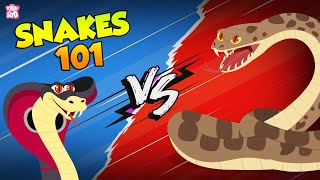
Snake, (suborder Serpentes), also called serpent, any of more than 3,400 species of reptiles distinguished by their limbless condition and greatly elongated body and tail. Venomous snakes have unique holes in between their nostrils and eyes that allow them to detect slight temperature differences in prey; non-venomous snakes do not have pits. An easy difference between venomous vs non-venomous snakes is their pupil shape. Make sure you watch the whole video to know all the answers to your curious questions! Leave your ideas, suggestions, and questions for Dr. Binocs at this Email Id: peekabookidzfeedback@gmail.com For more fun learning videos SUBSCRIBE to Peekaboo Kidz: http://bit.ly/SubscribeTo-Peekabookidz Credits - Copyrights and Publishing: Rajshri Entertainment Private Limited All rights reserved. Catch Dr.Binocs At - https://goo.gl/SXhLmc To Watch More Popular Nursery Rhymes Go To - https://goo.gl/CV0Xoo To Watch Alphabet Rhymes Go To - https://goo.gl/qmIRLv To Watch Compilations Go To - https://goo.gl/nW3kw9 Catch More Lyricals At - https://goo.gl/A7kEmO Subscribe to Peekaboo Kidz: http://bit.ly/peekabookidz Like our Facebook page: https://www.facebook.com/peekabootv , For brand collaborations and inquiries, reach out to us at : collab@rajshri.com
Jadobe Β· 8 months ago
Viverridae animals
Viverridae is a family of small to medium-sized feliform mammals, comprising 14 genera with 33 species. This family was named and first described by John Edward Gray in 1821.[3] Viverrids occur all over Africa, in southern Europe, and in South and Southeast Asia on both sides of the Wallace Line.[4] |
Jadobe Β· 8 months ago
Mustelidae animals
The Mustelidae (/mΚΛstΙlΙͺdiΛ/;[2] from Latin mustela, weasel) are a diverse family of carnivoran mammals, including weasels, badgers, otters, polecats, martens, grisons, and wolverines. Otherwise known as mustelids (/ΛmΚstΙͺlΙͺdz/[3]), they form the largest family in the suborder Caniformia of the order Carnivora with about 66 to 70 species in nine subfamilies.[4] |
Jadobe Β· 8 months ago
Leporidae animal
Leporidae (/lΙΛpΙΛrΙͺdiΛ, -daΙͺ/) is the family of rabbits and hares (Lepus), containing over 70 species of extant mammals in all. Together with the pikas, the Leporidae constitute the mammalian order Lagomorpha. Leporidae differ from pikas in that they have short, furry tails and elongated ears and hind legs. |
Jadobe Β· 8 months ago
Osteichthyes fish
Osteichthyes (/ΛΙstiΛΛΙͺkΞΈiΛz/ ost-ee-IK-theez; from Ancient Greek α½ΟΟΞΞΏΞ½ (ostΓ©on) 'bone' and αΌ°ΟΞΈΟΟ (ikhthΓΊs) 'fish'),[2] also known as osteichthyans or commonly referred to as the bony fish, is a diverse clade of vertebrate animals that have endoskeletons primarily composed of bone tissue. They can be contrasted with the Chondrichthyes (cartilaginous fish) and the extinct placoderms and acanthodians, which have endoskeletons primarily composed of cartilage. The vast majority of extant fish are members of Osteichthyes, being an extremely diverse and abundant group consisting of 45 orders, over 435 families and 28,000 species.[3] |
Jadobe Β· 8 months ago
Here comes the sun and these guys know where to look
LOHMEN, SAXONY, GERMANY - 2016/07/21: Some blossoms of common sunflowers (Helianthus annuus) are standing out of a whole sunflower field. (Photo by Frank Bienewald/LightRocket via Getty Images) Thu, Jul 21, 2016ββ’β12:00 AM SONY ILCE-6300 Ζ/5.6 1/1000 24.00mm ISO100 Monday 22 September 2014 06:21 PM ποΈ Here comes the sun and these guys know where to look π GHKLGHKLDS |
Prev678910Next
Prev17181920212223...64Next