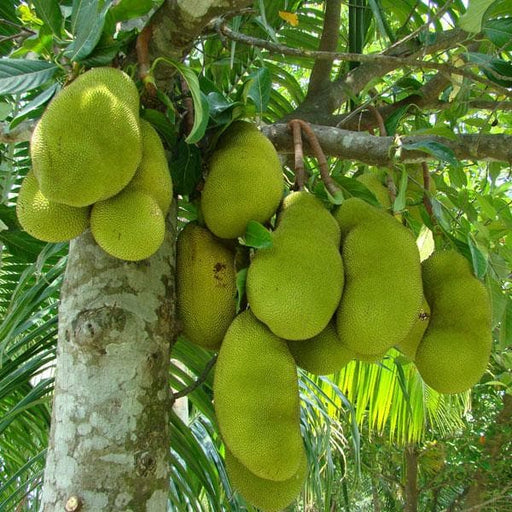
Enjoy the most delicious and nutritious tropical fruit at your home easily by growing Jackfruit plant
Enjoy the most delicious and nutritious tropical fruit at your home easily by growing Jackfruit plant.

Jackfruit erect evergreen perennial tree in Moraceae family. Leaves are dark green, alternate, glossy and somewhatleathery, fairly large and oval in shape. Flowers are short, stout and emerges from the trunk and large branches. The Jackfruit is a multiple fruit that is composed ofthe coherence of multiple flowe
Meski · 2 years ago Published on 2024-11-06 11:27:12 ID NUMBER: 124849
아이엔(I.N) "NO RETURN" | [Stray Kids(스트레이 키즈) : SKZ-PLAYER(슼즈 플레이어)]

[Credits]
Lyrics by : 아이엔, 방찬 (3RACHA)
Composed by :  방찬 (3RACHA), 아이엔, VERSACHOI
Arranged by :  VERSACHOI, 방찬 (3RACHA)
Original Publisher : JYP Entertainment
Sub-publisher : JYP Entertainment

[I.N "NO RETURN" Lyrics]
You can't go back anymore
No exit 나갈 수 없어
Why are you so serious?
I think you should just laugh it off

아무렇지도 않다는 말도
It doesn’t matter I don’t care
Look at my eyes, they’re not even shaking
I know you’ll come back to me

‘I hate you’
‘Just get lost’
‘I don’t need you’
몇 번을 말해도
결국 넌 back again

You cannot return
(Oh na na) yeah
You cannot return
(Oh na na) yeah
You cannot return

(I want it more, I want it more, I want it)
You found me, now there’s no return
(I want it more, I want it more, I want it)
You cannot return

도망치고 헤매이다
결국 you can’t get off me
You’re going crazy now
넌 이미 lost control

‘I hate you’
‘Just get lost’
‘I don’t need you’
몇 번을 말해도
결국 넌 back again

You cannot return
(Oh na na) yeah
You cannot return
(Oh na na) yeah
You cannot re-

(I want it more, I want it more, I want it)
(I want it more, I want it more, I want it)
You cannot re-

돌아가도 you’re back for more

(I want it more, I want it more, I want it)
(I want it more, I want it more, I want it)

You cannot return
You cannot re (turn)
You cannot return

Listen to "THIS & THAT" now🚚
http://stray-kids.lnk.to/THISANDTHAT

Listen to "This & That (This Remixes)" now⬅️
https://stray-kids.lnk.to/THIS_REMIXES

Listen to "This & That (That Remixes)" now➡️
https://Stray-Kids.lnk.to/THAT_REMIXES

Stray Kids "THIS & THAT"
iTunes & Apple Music: https://stray-kids.lnk.to/THISANDTHAT/AppleMusic
Spotify: https://stray-kids.lnk.to/THISANDTHAT/Spotify

Stray Kids "This & That (This Remixes)"
iTunes & Apple Music: https://stray-kids.lnk.to/THIS_REMIXES/AppleMusic
Spotify: https://stray-kids.lnk.to/THIS_REMIXES/Spotify

Stray Kids "This & That (That Remixes)"
iTunes & Apple Music: https://stray-kids.lnk.to/THAT_REMIXES/AppleMusic
Spotify: https://stray-kids.lnk.to/THAT_REMIXES/Spotify

Stray Kids Official YouTube: https://www.youtube.com/c/StrayKids
Stray Kids Official Twitter: https://twitter.com/Stray_Kids
Stray Kids Official Instagram: https://www.instagram.com/realstraykids/
Stray Kids Official TikTok: https://www.tiktok.com/@jypestraykids
Stray Kids Official Facebook: https://www.facebook.com/JYPEStrayKids/
Stray Kids Official Threads: https://www.threads.com/@realstraykids
Stray Kids Official FANS (Android) https://play.google.com/store/apps/details?id=com.jype.fans
Stray Kids Official FANS (iOS) https://apps.apple.com/app/fans-for-fans-artists/id6474999628

#StrayKids #스트레이키즈
#아이엔 #I_N
#SKZ_PLAYER #슼즈플레이어
#YouMakeStrayKidsStay

Copyrights 2026 ⓒ JYP Entertainment. All Rights Reserved.
Stray Kids · 12 hours ago Published on 2026-11-17 09:00:01
Die Harnischwelse (Loricariidae) sind eine in Mittel- und Südamerika vorkommende Familie der Ordnung der Welsartigen. Mit mehr als 80 Gattungen, über 820 beschriebenen und geschätzt 700 bis heute unbeschriebenen Arten sind sie die artenreichste Familie der Welsartigen und eine der artenreichsten Fischfamilien überhaupt.
Les Loricariidés (Loricariidae) sont la plus grande famille de poissons-chats (ordre des Siluriformes), avec 1 000[1] espèces connues et de nouvelles espèces décrites chaque année. Les Loricariidés proviennent des eaux douces du Costa Rica, du Panama, et des zones tropicales et subtropicales d'Amérique du Sud. On connaît des Loricariidés dans toutes les eaux douces du Panama à l'Argentine. Ces poissons sont connus pour leur ventouse buccale, et les plaques osseuses couvrant leur corps. Plusieurs genres sont vendus sous le nom de plécos, notamment le Pléco commun, et sont très populaires en aquariophilie. Plusieurs espèces sont connues pour produire des sons de stridulation grâce à leurs épines pectorales[2].
The L-number system is a semi-scientific classification system of catfish based on photographs of shipments of tropical catfish of the family Loricariidae published by the German aquarium magazine DATZ (Die Aquarien- und Terrarienzeitschrift (The Aquarium and Terrarium Magazine)). The first L-number was published in 1988.
Baryancistrus xanthellus (L018, L081, L085, L177, LDA060) er en art av harniskmaller i gruppen Ancistrini. Det er en bunnlevende ferskvannsfisk som finnes i Rio Xingu i Amazonas-vassdraget. Den blir opptil 29,7 cm lang SL[1]. Baryancistrus xanthellus er på grunn av sitt spesielle utseende en populær akvariefisk, og har fram til arten ble beskrevet i 2011 gått under forskjellige L-numre, samt det engelske populærnavnet «gold nugget» eller «golden nugget» i akvariehandelen.
Odontodes, or dermal teeth, are hard structures found on the external surfaces of animals or near internal openings. They consist of a soft pulp cavity surrounded by dentine and covered by a mineralised substance such as enamel, a structure similar to that of teeth.[1] They generally do not have the same function as teeth, and are not replaced the same way teeth are in most fish.[2] In some animals (notably catfish), the presence or size of odontodes can be used in determining the sex.[3]
Hypostomus asperatus[1] is a species of catfish in the family Loricariidae. It is native to South America, where it occurs in the Tocantins River basin. The species reaches 22.9 cm (9 inches) in standard length and is believed to be a facultative air-breather.[2]
Hypostomus subcarinatus is a species of catfish in the family Loricariidae. It is native to South America, where it occurs in the coastal drainage basins of eastern Brazil, including the São Francisco River basin. The species reaches 31 cm (12.2 inches) in total length and is believed to be a facultative air-breather.[1] Although originally described in 1855, no verifiable scientific record of the species was made until a 2014 survey of an urban lake in downtown Belo Horizonte in the state of Minas Gerais collected seven specimens that were later recognized as Hypostomus subcarinatus, leading to a redescription of the species in 2019.[2]
Hypostomus commersoni[1] is a species of catfish in the family Loricariidae. It is native to South America, where it occurs in the Paraná River drainage, including the Iguazu River, the Paraguay River, the Río de la Plata, and the Dulce River. It is typically found in rivers with muddy substrates and moderate currents. The water that H. commersoni inhabits usually has a temperature of 16.8 to 27.8 °C (62.2 to 82.0 °F), a pH of 7.2 to 9.2, a turbidity of 23.7 to 442 NTU, an oxygen concentration of 6.1 to 9.1 mg/L, and a conductivity of 1.087 to 2.654 μS/cm.[2]