| Albums | Category | Messages | ||| |
About Yale University Yale University's roots can be traced back to the 1640s, when colonial clergymen led an effort to establish a college in New Haven to preserve the tradition of European liberal education in the New World. This vision was fulfilled in 1701, when the charter was granted for a school βwherein Youth may be instructed in the Arts and Sciences [and] through the blessing of Almighty God may be fitted for Publick employment both in Church and Civil State.β In 1718 the school was renamed βYale Collegeβ in gratitude to the Welsh merchant Elihu Yale, who had donated the proceeds from the sale of nine bales of goods together with 417 books and a portrait of King George I. Yale College survived the American Revolutionary War (1775β1783) intact and, by the end of its first hundred years, had grown rapidly. The nineteenth and twentieth centuries brought the establishment of the graduate and professional schools that would make Yale a true university. The Yale School of Medicine was chartered in 1810, followed by the Divinity School in 1822, the Law School in 1824, and the Graduate School of Arts and Sciences in 1847 (which, in 1861, awarded the first Ph.D. in the United States), followed by the schools of Art in 1869, Music in 1894, Environment in 1900, Nursing in 1923, Drama in 1955, Architecture in 1972, and Management in 1974. International students have made their way to Yale since the 1830s, when the first Latin American student enrolled. The first Chinese citizen to earn a degree at a Western college or university came to Yale in 1850. Today, international students make up nearly 9 percent of the undergraduate student body, and 16 percent of all students at the University. Yaleβs distinguished faculty includes many who have been trained or educated abroad and many whose fields of research have a global emphasis; and international studies and exchanges play an increasingly important role in the Yale College curriculum. The University began admitting women students at the graduate level in 1869, and as undergraduates in 1969. Yale College was transformed, beginning in the early 1930s, by the establishment of residential colleges. Taking medieval English universities such as Oxford and Cambridge as its model, this distinctive system divides the undergraduate population into twelve separate communities of approximately 450 members each, thereby enabling Yale to offer its students both the intimacy of a small college environment and the vast resources of a major research university. Each college surrounds a courtyard and occupies up to a full city block, providing a congenial community where residents live, eat, socialize, and pursue a variety of academic and extracurricular activities. Each college has a master and dean, as well as a number of resident faculty members known as fellows, and each has its own dining hall, library, seminar rooms, recreation lounges, and other facilities. Today, Yale has matured into one of the worldβs great universities. Its 11,000 students come from all fifty American states and from 108 countries. The 3,200-member faculty is a richly diverse group of men and women who are leaders in their respective fields. The central campus now covers 310 acres (125 hectares) stretching from the School of Nursing in downtown New Haven to tree-shaded residential neighborhoods around the Divinity School. Yaleβs 260 buildings include contributions from distinguished architects of every period in its history. Styles range from New England Colonial to High Victorian Gothic, from Moorish Revival to contemporary. Yaleβs buildings, towers, lawns, courtyards, walkways, gates, and arches comprise what one architecture critic has called βthe most beautiful urban campus in America.β Yale's West Campus, located 7 miles west of downtown New Haven on 136 acres, was acquired in 2007 and includes 1.6 million square
Motishon Β· 3 weeks ago
Canal Streetcar Line
The Canal Streetcar Line is a streetcar line in New Orleans, Louisiana, operated by the New Orleans Regional Transit Authority (RTA). The line originally operated from 1861 until its closure in 1964. After a 40-year hiatus, it was rebuilt between 2000 and 2004, with streetcar service resuming on April 18, 2004. |
Motishon Β· 3 weeks ago
Finance Colleges In Kathalia
An online Finance program has been introduced by almost all Indian Universities/Institutions irrespective of their locations. This initiative has made aspirants from any state or city to apply to these government-approved universities without any geographical restrictions. However, there are a lot of candidates who still prefer to enroll in their nearby universities to pursue an online Finance degree. With the digital transformation of the education industry, interested candidates based in Kathalia can now apply to any university of their choice offering an online Finance program. Although the choices of online universities available in the regions of Kathalia or nearby places comfort them at another level. Besides, global recognition, affordable fee packages, trending specializations, industry-based curricula, etc. place these universities among the list of best that are available in India. Whether you are a student or a working professional, you can now enroll in an online Finance program offered by universities of Kathalia or nearby locations to lift up your knowledge & skill sets from anywhere around the world. |
Motishon Β· 1 month ago
Welcome to Everyone
Welcome to Everyone πΏπΏπΊπΊ Picture of Akkach Miah / Abdul Akkas Miah - Laltila Nirvoypur Nirbhaypur Kathalia Tripura Photo taken on 19 October 2023 #Abdul #Akkas #Akkach #Miah #Aftar #Amin #Akash #AbdulAkkas #AbdulAkkach #AkkasMiah #AkkachMiah #AbdulAkkasMiah #AbdulAkkachMiah #AftarAminAkash #Laltila #Nirvoypur #Nirbhaypur #Kathalia #Sepahijala #Tripura #FressMedia #KassMedia #kachpedia Monday 04 December 2023 Code number HGFDSOUYTE |
Motishon Β· 1 month ago
Reacts To Online Trolls
Priya Prakash Varrier Reacts To Online Trolls. We Are Feeling Bad For Her 3 September 2018, 9:40 am Priya Prakash Varrier has continuously been in the eyes of fans and media ever since her wink made her an overnight star. She has received love from all the corners of country and brand endorsement offers from all over. Priya whose first Malayalam film is yet to release is already among the most popular stars of India. She has done several brand endorsements and has been trolled on social media too. Like many stars, Priya has also found herself in controversies. Recently Priya had an interaction with Malayalam women's magazine Vanitha where she expressed her unhappiness with trollers. Reacts To Online Trolls Sunday 19 May 2019 β’ 06:54 AM π PPVMAY2019 |
Maniko Β· 5 years ago
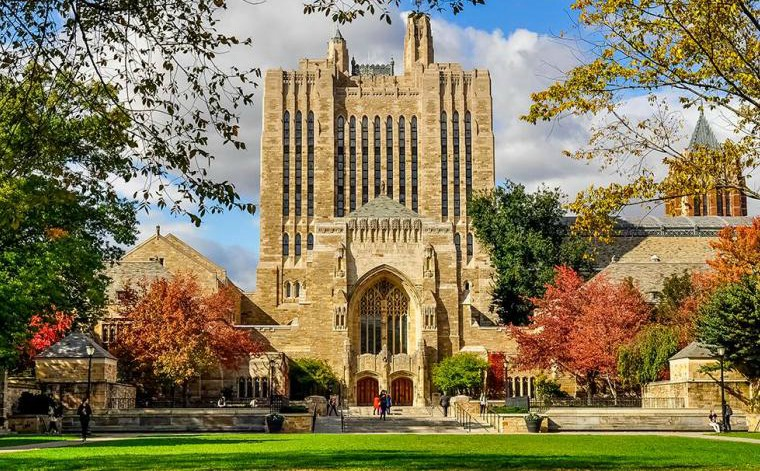
About Yale University
About Yale University Yale University's roots can be traced back to the 1640s, when colonial clergymen led an effort to establish a college in New Haven to preserve the tradition of European liberal education in the New World. This vision was fulfilled in 1701, when the charter was granted for a school βwherein Youth may be instructed in the Arts and Sciences [and] through the blessing of Almighty God may be fitted for Publick employment both in Church and Civil State.β In 1718 the school was renamed βYale Collegeβ in gratitude to the Welsh merchant Elihu Yale, who had donated the proceeds from the sale of nine bales of goods together with 417 books and a portrait of King George I. Yale College survived the American Revolutionary War (1775β1783) intact and, by the end of its first hundred years, had grown rapidly. The nineteenth and twentieth centuries brought the establishment of the graduate and professional schools that would make Yale a true university. The Yale School of Medicine was chartered in 1810, followed by the Divinity School in 1822, the Law School in 1824, and the Graduate School of Arts and Sciences in 1847 (which, in 1861, awarded the first Ph.D. in the United States), followed by the schools of Art in 1869, Music in 1894, Environment in 1900, Nursing in 1923, Drama in 1955, Architecture in 1972, and Management in 1974. International students have made their way to Yale since the 1830s, when the first Latin American student enrolled. The first Chinese citizen to earn a degree at a Western college or university came to Yale in 1850. Today, international students make up nearly 9 percent of the undergraduate student body, and 16 percent of all students at the University. Yaleβs distinguished faculty includes many who have been trained or educated abroad and many whose fields of research have a global emphasis; and international studies and exchanges play an increasingly important role in the Yale College curriculum. The University began admitting women students at the graduate level in 1869, and as undergraduates in 1969. Yale College was transformed, beginning in the early 1930s, by the establishment of residential colleges. Taking medieval English universities such as Oxford and Cambridge as its model, this distinctive system divides the undergraduate population into twelve separate communities of approximately 450 members each, thereby enabling Yale to offer its students both the intimacy of a small college environment and the vast resources of a major research university. Each college surrounds a courtyard and occupies up to a full city block, providing a congenial community where residents live, eat, socialize, and pursue a variety of academic and extracurricular activities. Each college has a master and dean, as well as a number of resident faculty members known as fellows, and each has its own dining hall, library, seminar rooms, recreation lounges, and other facilities. Today, Yale has matured into one of the worldβs great universities. Its 11,000 students come from all fifty American states and from 108 countries. The 3,200-member faculty is a richly diverse group of men and women who are leaders in their respective fields. The central campus now covers 310 acres (125 hectares) stretching from the School of Nursing in downtown New Haven to tree-shaded residential neighborhoods around the Divinity School. Yaleβs 260 buildings include contributions from distinguished architects of every period in its history. Styles range from New England Colonial to High Victorian Gothic, from Moorish Revival to contemporary. Yaleβs buildings, towers, lawns, courtyards, walkways, gates, and arches comprise what one architecture critic has called βthe most beautiful urban campus in America.β Yale's West Campus, located 7 miles west of downtown New Haven on 136 acres, was acquired in 2007 and includes 1.6 million square |
Prev12Next
About Yale University