The site tips.wapka.site
T I P S
Albums Category Messages |||
Dista · 1 year ago
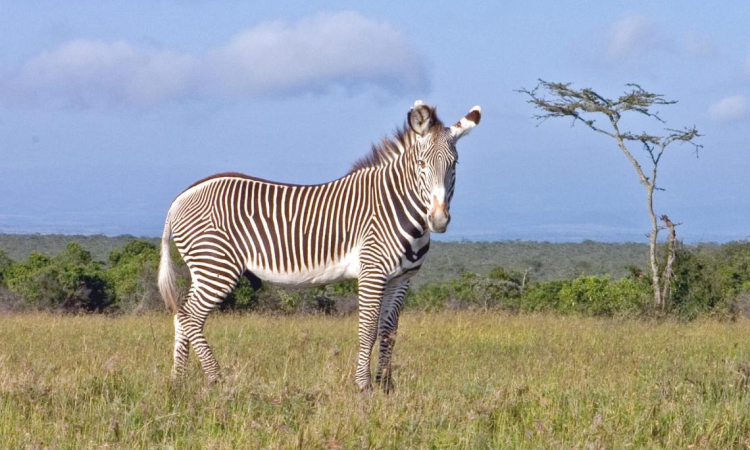
Latest Conservation Data Endangered Grévy's zebra, Photo by Bernard DUPONT on Flickr licensed under CC BY-SA 2.0 (Cropped from original)
IUCN reported Plains Zebras to be near threatened. However, a 2020 study reported that the population had decreased by 25% since 20021.

IUCN categorized Mountain Zebras as Vulnerable3. With over 34,000 mature individuals, its population is rising due to the recovery from a drought in the 80s. However, the threat remains, hence the vulnerable status.

The most unfortunate of the three zebra species is the endangered Grévy's zebra. Its population declined by more than half for the last three decades2. Habitat degradation, competition with livestock, and local hunting are the top threats that led to their status.
Dista · 1 year ago
Published on 2024-12-11 02:47:56
ID NUMBER: 126492
International Zebra Day Protecting The Striped Equids (Animals) (0)

Edit Report Send Share
Dista · 1 year ago
Why International Zebra Day Matters
Despite existing protective laws, hunters often target zebras for their skins and meat. Climate change further exacerbates the challenges for zebras, who struggle with drought and extreme heat waves, jeopardizing their food and water sources. 

Moreover, urbanization, agriculture, and deforestation affect zebra habitats, increasing conflicts between humans and zebras. 

International Zebra Day aims to raise awareness about what these creatures face, and by doing so, it calls everyone to action. Learn more about facts, the latest data, and global initiatives that can help you with the cause below.
Dista · 1 year ago
Unique Features of Zebras
Zebras' black and white stripes are a natural bug repellent and marker of individual identification. 
Zebra foals are born with brown and white stripes. Some even have spots. 
Their adaptive digestive system allows them to efficiently extract energy from fibrous grasses, contributing to their survival in environments with scarce food.
Zebra stripes regulate their body temperature and help them camouflage themselves in the African continent.
Their wide-set eyes and swiveling ears help them detect potential threats in their surroundings.
Dista · 1 year ago
Latest Conservation Data Endangered Grévy's zebra, Photo by Bernard DUPONT on Flickr licensed under CC BY-SA 2.0 (Cropped from original)
IUCN reported Plains Zebras to be near threatened. However, a 2020 study reported that the population had decreased by 25% since 20021.

IUCN categorized Mountain Zebras as Vulnerable3. With over 34,000 mature individuals, its population is rising due to the recovery from a drought in the 80s. However, the threat remains, hence the vulnerable status.

The most unfortunate of the three zebra species is the endangered Grévy's zebra. Its population declined by more than half for the last three decades2. Habitat degradation, competition with livestock, and local hunting are the top threats that led to their status.
Dista · 1 year ago
Conservation Initiatives
Save the Stripes, launched by the David Sheldrick Wildlife Trust, focuses on conserving the endangered Grevy's zebra in Kenya. It works on habitat protection, anti-poaching, and community engagement.
Grevy's Zebra Trust conserves the Grevy's zebra in Ethiopia and Kenya. They conduct monitoring, research, and community outreach programs to ensure the survival of this endangered species.
The African Wildlife Foundation (AWF) works to conserve key African landscapes, including zebra habitats. It uses community-based conservation projects, habitat protection, and anti-poaching initiatives.
Dista · 1 year ago
Brief Timeline of Zebra Conservation Efforts
1979:
The Convention on International Trade in Endangered Species of Wild Fauna and Flora (CITES) included Grevy's zebras in its appendices, regulating their international trade.

2008:
The IUCN moved down the status of Mountain Zebras from Endangered to Vulnerable.

2010:
The UN General Assembly declared 2011-2020 as the United Nations Decade on Biodiversity, indirectly promoting zebra conservation efforts.

2015:
The UN adopted the Sustainable Development Goals, which include targets related to wildlife conservation.

2016:
The IUCN updated the status of the Plains zebra from Least Concern to Near Threatened.
Jadobe · 1 hour ago
The zebra mussel is a small shellfish
Color patterns vary, with only dark or colored shells or no stripes. They are typically found attached to objects, surfaces, or each other by threads underneath the shells. Although similar in appearance to the quagga mussel, the two species can be easily distinguished. When placed on a surface zebra mussels are stable on their flattened underside while quagga mussels, lacking a flat underside, will fall over.
Jadobe · 2 hours ago
Die Harnischwelse (Loricariidae)
Die Harnischwelse (Loricariidae) sind eine in Mittel- und Südamerika vorkommende Familie  der Ordnung der Welsartigen. Mit mehr als 80 Gattungen, über 820 beschriebenen und geschätzt 700 bis heute unbeschriebenen Arten sind sie die artenreichste Familie der Welsartigen und eine der artenreichsten Fischfamilien überhaupt.
Jadobe · 2 hours ago
Les Loricariidés (Loricariidae)
Les Loricariidés (Loricariidae) sont la plus grande famille de poissons-chats (ordre des Siluriformes), avec 1 000[1] espèces connues et de nouvelles espèces décrites chaque année. Les Loricariidés proviennent des eaux douces du Costa Rica, du Panama, et des zones tropicales et subtropicales d'Amérique du Sud. On connaît des Loricariidés dans toutes les eaux douces du Panama à l'Argentine. Ces poissons sont connus pour leur ventouse buccale, et les plaques osseuses couvrant leur corps. Plusieurs genres sont vendus sous le nom de plécos, notamment le Pléco commun, et sont très populaires en aquariophilie. Plusieurs espèces sont connues pour produire des sons de stridulation grâce à leurs épines pectorales[2].
Jadobe · 2 hours ago
L-number
The L-number system is a semi-scientific classification system of catfish based on photographs of shipments of tropical catfish of the family Loricariidae published by the German aquarium magazine DATZ (Die Aquarien- und Terrarienzeitschrift (The Aquarium and Terrarium Magazine)). The first L-number was published in 1988.
Jadobe · 2 hours ago
Baryancistrus xanthellus in wiki
Baryancistrus xanthellus (L018, L081, L085, L177, LDA060) er en art av harniskmaller i gruppen Ancistrini. Det er en bunnlevende ferskvannsfisk som finnes i Rio Xingu i Amazonas-vassdraget. Den blir opptil 29,7 cm lang SL[1]. Baryancistrus xanthellus er på grunn av sitt spesielle utseende en populær akvariefisk, og har fram til arten ble beskrevet  i 2011 gått under forskjellige L-numre, samt det engelske populærnavnet «gold nugget» eller «golden nugget» i akvariehandelen.
Jadobe · 2 hours ago
Odontode (Wikipedia)
Odontodes, or dermal teeth, are hard structures found on the external surfaces of animals or near internal openings. They consist of a soft pulp cavity surrounded by dentine and covered by a mineralised substance such as enamel, a structure similar to that of teeth.[1] They generally do not have the same function as teeth, and are not replaced the same way teeth are in most fish.[2] In some animals (notably catfish), the presence or size of odontodes can be used in determining the sex.[3]
Jadobe · 2 hours ago
Hypostomus asperatus in wiki
Hypostomus asperatus[1] is a species of catfish in the family Loricariidae. It is native to South America, where it occurs in the Tocantins River basin. The species reaches 22.9 cm (9 inches) in standard length and is believed to be a facultative air-breather.[2]
Jadobe · 2 hours ago
Panaque armbrusteri Brazil
English: Panaque armbrusteri, Brazil, Altamira, Para
Jadobe · 2 hours ago
Hypostomus subcarinatus in wiki
Hypostomus subcarinatus is a species of catfish in the family Loricariidae. It is native to South America, where it occurs in the coastal drainage basins of eastern Brazil, including the São Francisco River basin. The species reaches 31 cm (12.2 inches) in total length  and is believed to be a facultative air-breather.[1] Although originally described in 1855, no verifiable scientific record of the species was made until a 2014 survey of an urban lake in downtown Belo Horizonte in the state of Minas Gerais collected seven specimens that were later recognized as Hypostomus subcarinatus, leading to a redescription of the species in 2019.[2]
Jadobe · 2 hours ago
Botia striata
A zebra loach (Botia striata), size about 7cm.
Meski · 1 year ago
UC Browser 13.2.0.1296 (com.UCMobile.intl)


Jadobe - Author
Junaki - Author
Falaki - Author
Fanta - Author
Atalii - Author
Manoo - Author
Salpon - Author
Simran - Author
Billkis - Author
Seran - Author
 Prev1234...10Next  
Zebra Mussels (1)
Zebra Pleco (10)
Zebra Shark (3)
Zebra Spitting Cobra (3)
Zebrafish (4)
Zebu (7)
Zokor (4)
Zonkey (4)
Zorse (5)
Zuchon (3)
 Prev1234...62Next  
Browsers (1)
Albums Category Members Messages
Login
HELP CENTER :-: GO TO TOP
tips.wapka.site
Copyright © 2026 All Rights Reserved
Powered by wapka.org