Prev6061626364Next
Anila Β· 1 year ago
Nainital, Uttarakhand
Perched amidst the Kumaon hills, Nainital is a charming hill station dotted with emerald lakes and towering peaks. May marks the beginning of the tourist season in Nainital, with pleasant weather and clear skies attracting visitors from far and wide. Take a boat ride on the shimmering waters of Naini Lake, visit the historic Naina Devi Temple, or trek to the scenic viewpoints of Snow View and Tiffin Top for panoramic vistas of the Himalayas. With its cool temperatures and refreshing breeze, Nainital in May is a delightful escape into nature's embrace. |

Anila Β· 1 year ago
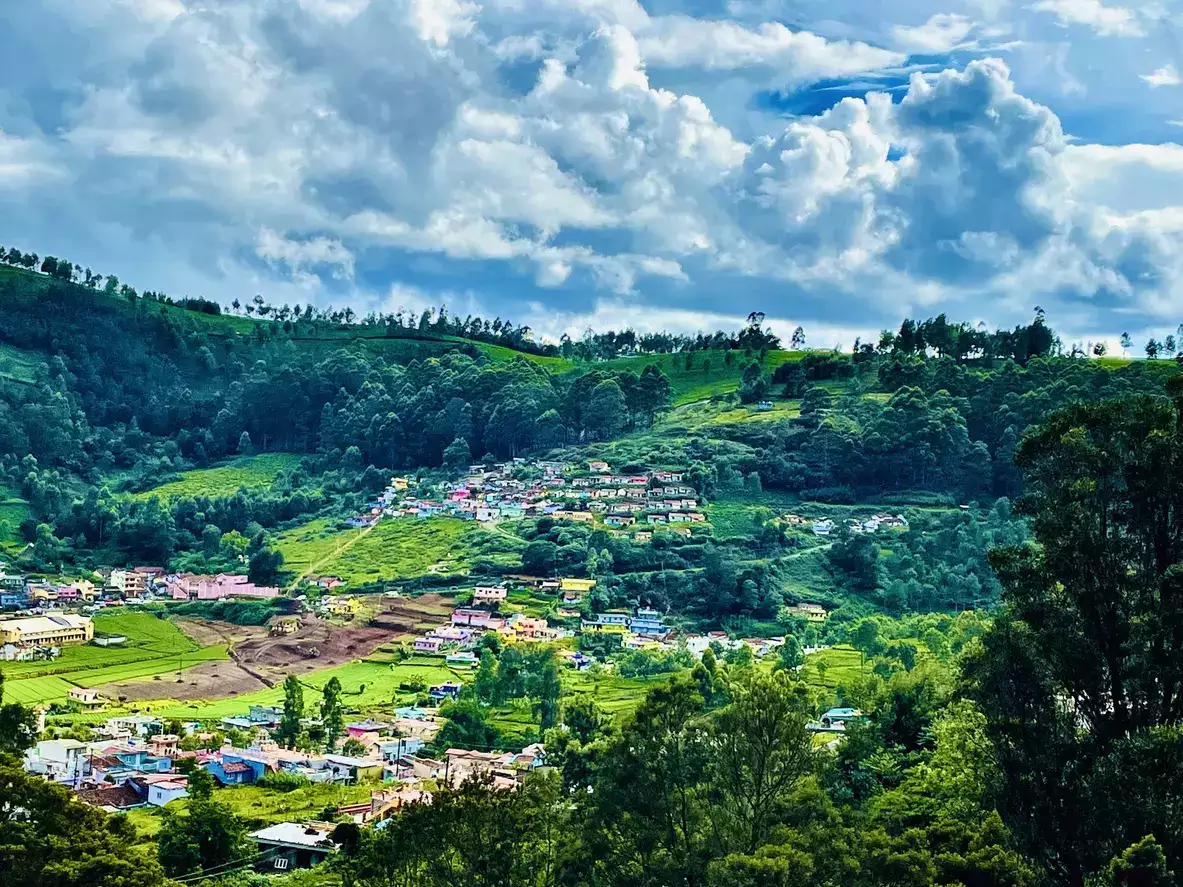
Ooty, Tamil Nadu
Fondly referred to as the "Queen of Hill Stations," Ooty is a picturesque destination nestled in the Nilgiri Hills of Tamil Nadu. May marks the onset of the pre-monsoon showers in Ooty, rejuvenating the lush green landscapes and carpeting the hillsides with vibrant blooms. Explore the serene Ooty Lake, stroll through the botanical gardens, or hop aboard the Nilgiri Mountain Railway for a scenic joyride through the mist-covered hills. With its pleasant weather and blooming flora, Ooty in May offers a delightful retreat for nature lovers and adventure enthusiasts alike. |
Mypix Β· 1 year ago
Gargoyle of Notre-Dame de Paris
The cathedral Notre-Dame de Paris is one of the most enduring symbols of the French capital city. Hugo conceived of The Hunchback of Notre Dame as a story of the cathedral itself and devoted two chapters of the novel to describing it. He focused primarily on the Gothic architectural elements of the structure, including its flying buttresses, clerestory windows, and stained glass. Hugo identified Gothic architecture as the bearer of the cultural heritage of France and argued that, as such, it should be protected. At the time that the novel was written (between 1828 and 1831), Paris was verging on major changes that cumulatively threatened to destroy much of its cultural heritage. The French Revolution had resulted in the desacralization, decay, and consequent destruction of many Gothic cathedrals and churches. In the July Revolution of 1830, the French people expressed a desire to liberate themselves from the past. This uprising was driven by a condemnation of the forms and institutions associated with the traditional monarchical regime, and its leaders sought a new way forward. |
Mypix Β· 1 year ago
Notre-Dame de Paris
In The Hunchback of Notre Dame, Hugo recreates the vibrant, intense atmosphere of 15th-century life to remind his readers of the splendor and significance of Parisβs Gothic past. The book doubles as a plea for the preservation of the cityβs historic Gothic architecture (and thus its heritage). His plea was met with great success. The first printing, by publisher Charles Gosselin, was distributed in four issues of 275 copies each, and the novel was instantly, incredibly popular. Many thousands of printings followed. The Hunchback of Notre Dame circulated widely, inspiring illustrations by lithographers, painters, book illustrators, and even cartoonists. Images from the novel (especially images of the cathedral) became known to individuals at all levels of society. Notre-Dame de Paris became a French national icon, and the proliferation of images of the cathedral helped revive the use and prestige of Gothic forms. An extensive program of renovation, overseen by French restoration specialist EugΓ¨ne-Emmanuel Viollet-le-Duc, was undertaken in the mid-1840s, and in the latter half of the 19th century Gothic monuments began to regain their religious significance. |
Mypix Β· 1 year ago
The Hunchback of Notre Dame
The Hunchback of Notre Dame has been adapted several times for the stage and screen. One of the most notable film versions was directed by William Dieterle; it was released in 1939 and starred Charles Laughton and Maureen OβHara, though its happy ending diverged significantly from Hugoβs novel. Other screen adaptations include a 1923 silent film featuring Lon Chaney and a 1956 version starring Anthony Quinn and Gina Lollobrigida. |
Masta Β· 1 year ago
Charles C. Dawson and class at the School of the Art Institute of Chicago
English: Charles Dawson (back row, fourth from left) and class at the School of the Art Institute of Chicago, c. 1916. Standing to Dawsonβs right is Archibald J. Motley, Jr. Professor Karl Buehr is seated in the front row, center. Photograph from the Charles C. Dawson Collection, DuSable Museum of African American History. A gift from Mrs. Mary R. Dawson, deceased. Date circa 1916 Source https://www.aiga.org/design-journeys-charles-dawson#slideshow-1-3 |
Masta Β· 1 year ago
Art Institute of Chicago | Chicago | Illinois (9181712330)
The Art Institute of Chicago (AIC) is an encyclopedic art museum located in Chicago's Grant Park. It features a collection of Impressionist and Post-Impressionist art in its permanent collection. Its holdings also include American art, Old Masters, European and American decorative arts, Asian art, modern and contemporary art, and architecture and industrial and graphic design. In addition, it houses the Ryerson & Burnham Libraries. Tracing its history to a free art school and gallery founded in 1866, the museum is located at 111 South Michigan Avenue in the Chicago Landmark Historic Michigan Boulevard District. It is associated with the School of the Art Institute of Chicago and is overseen by Director and President Douglas Druick. At one million square feet, it is the second largest art museum in the United States, after the Metropolitan Museum of Art. en.wikipedia.org/wiki/Art_Institute_of_Chicago en.wikipedia.org/wiki/Wikipedia:Text_of_Creative_Commons_... Date 27 June 2013, 03:15 |
Masta Β· 1 year ago
KΕrinbΕ Crossing
Size of this preview: 800 Γ 598 pixels. Other resolutions: 320 Γ 239 pixels | 640 Γ 478 pixels | 1,024 Γ 765 pixels | 1,280 Γ 956 pixels | 2,048 Γ 1,530 pixels. Original file (2,048 Γ 1,530 pixels, file size: 376 KB, MIME type: image/jpeg); ZoomViewer File information Structured data Captions Edit English Add a one-line explanation of what this file represents Summary edit Description English: KΕrinbΕ Crossing Date 24 March 2019 |
Masta Β· 1 year ago
Animals That Turn White in Winter
As temperatures drop and autumn gives way to the seemingly ceaseless snows of winter, some animals in northerly climes exchange their pelage or plumage of summer drab for the purest white. Unlike many white animals associated with the north, such as polar bears and snowy owls, which are white all year, these creatures shift their colors with the seasons. Why this happens is not entirely clear. While camouflage is one evolutionary factor that has selected for seasonally white fur, it is likely that the switch to winter whites confers other advantages as well. Scientists believe that if staying hidden were the only upside, many more snow dwellers would be white, but that is not the case. In fact, most Arctic animals do not change color with the seasons at all, even species closely related to those that do. One theory is that a pale coat may have better insulating propertiesβbecause melanin, the substance responsible for colored hair, is absent from white fur, leaving air spaces in the hair shaft. |
Prev371372373374375376377...601Next